
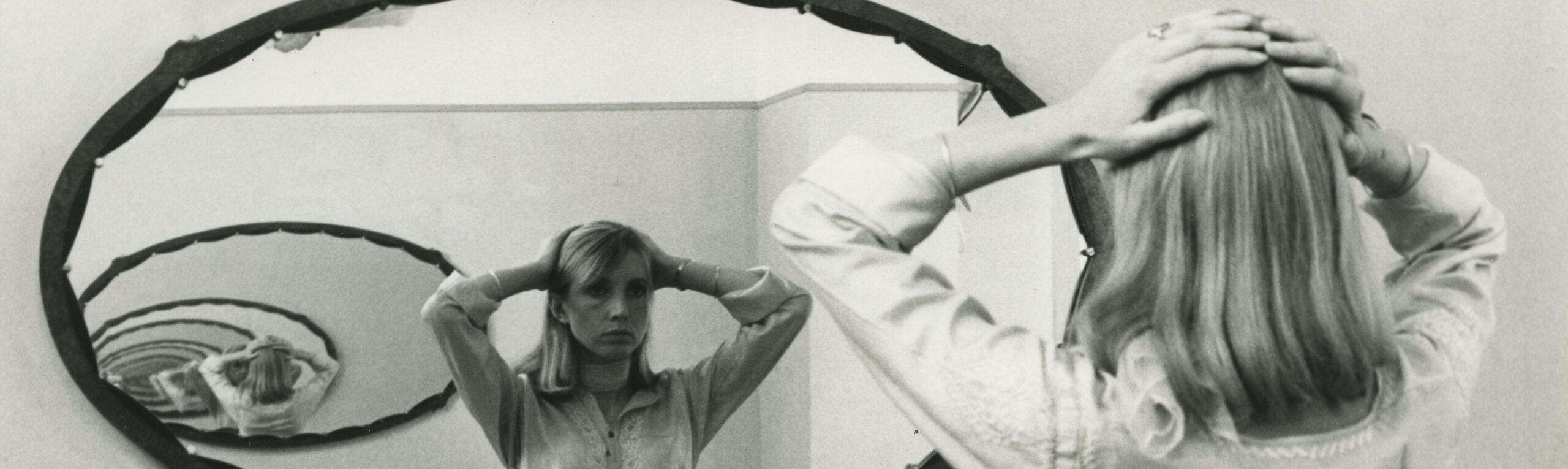
Photo archive Pierre Zucca
Deposited at the Institut pour la photographie during the summer of 2026, Pierre Zucca’s collection contains nearly 10,000 photographic items — negatives, contact sheets, silver gelatine prints, slides, etc. It traces Zucca’s career as a photographer between 1956 and 1980.
Alongside the well-known set and filming photographs from the 1960s and 1970s, the collection includes photographs from his youth, travel shots, portraits of actors and directors, press coverage, commissioned work, as well as more personal projects and those created for publication.
The collection also includes some paper archives, including the typescript of the text “La photographie du plaisir”, which serves as the introduction to the book Images du cinéma. Photographies de plateau réalisées par Pierre Zucca, published in 1980 by Éditions A. Moreau.
The Institut’s relationship with Pierre Zucca’s work began in 2019 with a project by Aurélien Froment, recipient of the first edition of the Research and Creation Support Grant. Théâtre Optique – Photo Zucca is an original project that led to an exhibition at the Institut in 2021, followed by one at the Rencontres d’Arles in 2023. For the first time, it showcased various aspects of Pierre Zucca’s practice, from set photography to his collaboration with the writer Pierre Klossowski.
By welcoming Pierre Zucca’s entire photographic archive, the Institut pour la photographie is following on from work previously undertaken by the Cinémathèque française. Since 2005, the Cinémathèque has digitally scanned more than 3,500 set and filming photographs, which have been made available through its Film Library.
The deposit of the Pierre Zucca collection at the Institute opens up new avenues for research, dissemination and the transmission of knowledge concerning the author’s work and the photographic image.
Biography
Born in Paris in 1943, Pierre Zucca learnt the art of photography at a very early age in his father’s studio, André Zucca. At the age of 20, after starting out in advertising and documentary photography, he began his career as a set photographer on the film Judex (1963) by director Georges Franju.
Against a backdrop of technical, political and aesthetic change, his work bears witness to the rise of the Nouvelle Vague in France, whose free and spontaneous approach revolutionised the conventions of contemporary cinema. He worked on nearly fifty films, directed by leading filmmakers such as Claude Chabrol, Jacques Rivette, François Truffaut or Alfred Hitchcock, Romain Gary and Louis Malle. He also photographed a whole generation of artists, actresses and actors: Jean Seberg, Jean-Pierre Léaud, Bernadette Lafont and Anthony Perkins, amongst many others.
At the same time, he continued his work in documentary photography, notably in Turkey and Alaska for Paris Match, and for organisations linked to the world of work. In 1970, he co-produced, as a photographer, the book La Monnaie Vivante (published by Eric Losfeld Editions) with Pierre Klossowski. He also collaborated with the author Liliane Siegel on a series about yoga — published in 1973 by Denoël Editions under the title Le Yoga par l’image. Against this backdrop, Pierre Zucca gradually turned his attention to filmmaking.
From 1975 onwards, after making a few short films, he directed four feature films: Vincent mit l’âne dans un pré (et s’en vint dans l’autre) (1976), Roberte (1979) — an adaptation of Pierre Klossowski’s novel Roberte ce soir (1953) —, Rouge-gorge (1985) and Alouette, je te plumerai (1988). Furthermore, until the early 1990s, he directed various films for television as well as documentaries. Pierre Zucca is regarded as one of the leading filmmakers of the Post-Nouvelle Vague movement in France.
In 1980, although he had moved away from photography, he set out his thoughts on his practice and his relationship with images in the introduction to the book Images du cinéma. Photographies de plateau réalisées par Pierre Zucca, published by Alain Moreau.
Pierre Zucca died prematurely in 1995 at the age of 51, leaving behind a multifaceted legacy.